I hope the new year started well and everyone had a good break over the holidays. This time last year I started as the Chief Social Worker at the Department of Health and Social Care (DHSC) and much has happened in 12 months.
I was immediately struck by the breadth of active policy work on Adult Social Care (ASC) and began building relationships with partners, known and new, in what was for me a very different role. Moving from a local to national leadership position was a huge change from being responsible for multiple teams to a small office of 3 people; from operational and budget preoccupations to grappling with national policy levers to impact change and from local politicians to meetings with Ministers.
Since the Independent Commission was announced last January, the Department has been busy with significant policy and delivery and Ministers have agreed three clear objectives for ASC to connect and guide this work over the next years: to improve quality of care, to promote choice and control, and to join up services.
We are making tangible improvements towards those objectives, this includes improving the quality of care by valuing and supporting our vital care workforce, such as legislating for a Fair Pay Agreement backed by £500 million of funding, and investing £12 million in learning, development, and new qualifications. We are also enabling people to have more choice and control over their care, by promoting greater use of direct payments and expanding care options to boost independent living at home through a Disabled Facilities Grant. Lastly, we are strengthening the join-up between health and social care services, so that people experience more integrated and person-centred care, by developing neighbourhood health services.
These three priorities are aligned with Fit for the Future, the 10 year plan for the NHS which was published last July. The 10 year plan features neighbourhood health as a central plank in enabling the shift to more support in people’s homes and communities. Good quality social work that enables people to have choice and control, to be connected and to live healthy and happy lives in their own homes, is vital to achieving this ambition.
The 10 year plan is underpinned by the need to address health inequity and to support strong partnership work with positive relationships across health, care and wider public services. Social work and social care play a critical role, both by amplifying the voice of those who face multiple barriers and systemic discrimination and by embedding relational ways of connecting with people and with partners at multiple levels across local systems. The alignment and implementation of neighbourhood health and wellbeing has, therefore been one of my priorities over the last year.
The Independent Commission is also underway as part of our critical first steps towards delivering a National Care Service. I was privileged to work with some brilliant colleagues last summer to consider the specific role and value of social work in the context of developing a national care service, resulting in The Role and Value of High-quality Social Work document that was shared with the Independent Commission. A huge thanks to all who co-produced this, generously sharing their knowledge and expertise.
One of the strongest themes that emerged from reflecting on lived experience and people’s stories was the impact of relational social work practice as an intervention. When there is understandably huge concern about waiting lists, unmet needs and a focus on processes, it is important to recognise the need to really understand people and their stories, to be persistent with people who might be easy to ‘write off’ and to enable people who face challenges and transitions in their lives to see the possibilities of change. Thinking together with Principal Social Workers (PSWs) and colleagues about the impact of high-quality social work on people’s lives was an inspiring reminder of the creativity, compassion, commitment and deep expertise that social workers display every day.
I am encouraged by the further development of the Social Care Workforce Race Equality Standard (SC-WRES) over the last year, with almost 2 out of 3 local authorities now using this as a tool to help address structural inequity in their social work and wider workforce. DHSC sponsored the development of the tool and Skills for Care have committed to supporting its expansion. The SC-WRES supports systematic collection of powerful data that needs to be used alongside evidence from lived experience to drive purposeful action and deliver real change so that all social workers feel psychological safety, are supported to thrive and leadership teams fully reflect the communities we serve.
Improving the national response to escalations from Safeguarding Adults Reviews (SARs) and the themes identified through 2 national SARs analyses, has been another priority. Working with partners, internal governance has strengthened, actions progressed and more far-reaching recommendations are being considered. In October, the Government announced its intention to implement Liberty Protection Safeguards (LPS) and will consult on taking this forward in the coming months.
Over the last 2 years, the CQC have been visiting Councils to assure delivery of Care Act responsibilities. PSWs, alongside principal OTs, are playing an important role in the assurance process. It’s important to recognise the huge amount of hard work involved and the emotional toll for some colleagues. Reflecting on the first round of baseline assessments soon finishing, overall, the process has shone a light on the importance of high-quality practice, supported by leaders across the whole organisation. Assessments have - and will continue to - play an important role in supporting the delivery of government's key ambitions and ministerial priorities. CQC are currently considering the learnings from baseline assessments and will be shortly setting out the next steps.
Part of the Chief Social Worker role is connecting with social workers, people with lived experience and leaders across the sector and I have most enjoyed meeting so many inspiring people and excellent teams over the last year, from every corner of the country. I am always struck by the passion, enthusiasm and commitment of colleagues to improving services and improving lives, be they a dedicated shared lives carer, an autistic person developing co-production with a Council, PSWs, frontline staff or senior leaders.
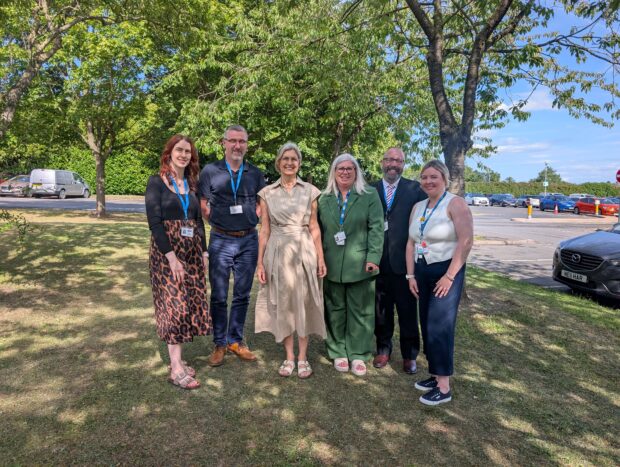
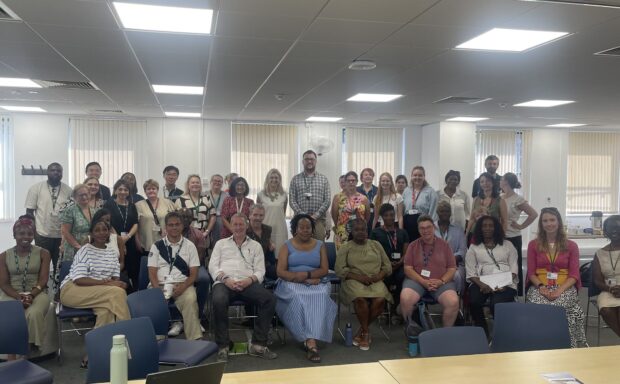
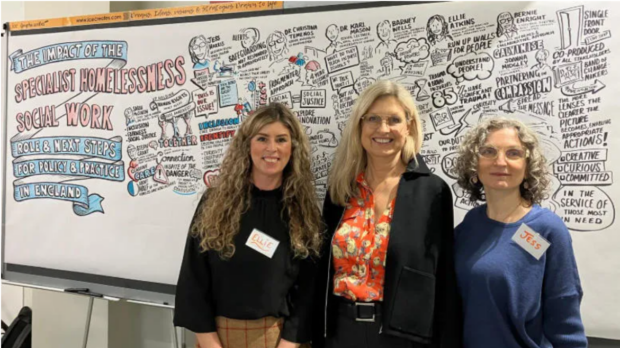
I have been impressed by the range of innovation and change across local authorities being driven by strong social work values (some teams pictured throughout this blog).
Over the last year, I have hugely appreciated the leadership and advice of PSWs, Principal Occupational Therapists, Approved Mental Health Professional (AMHP) leads and ADASS, alongside other partners. PSWs have demonstrated exceptional support for practice developments and critical projects such as the refresh of national strength-based practice guidance in partnership with IMPACT.
I also wanted to take the opportunity to thank Robert Lewis, Mental Health Social Work lead, who has not only been a great source of ideas and support but has relentlessly advocated for the social model across the mental health agenda, from advising on the Mental Health Bill through its parliamentary progress (now law), to grappling with knotty and systemic issues, to covering many miles connecting with colleagues across the country, to planning AMHP data and workforce requirements that are fit for the future.
Looking forward
As we start the year, winter resilience continues to be a live theme. I look forward to continuing to work with DASS and NHS colleagues to make sure people get the right support, at the right time and in the right place by reducing avoidable admissions to hospital and care transfer delays, including thinking about the hospital social work role.
The ‘left shift’ to more prevention and more support at home through the development of neighbourhood health and wellbeing continues and in the coming months, this will include work on the Modern Service Framework (MSF) for frailty and dementia. MSFs are commitments in the NHS 10 year plan to standards across health and social care. Robert Lewis is also contributing to the MSF on severe mental illness.
In a rapidly changing world, I will continue to work with colleagues to improve the quality of social work practice, including how we support high quality students to enter the profession, improve the experience of young people preparing for adulthood, and better use of digital, data and AI tools to support people to live fulfilling lives. More than 10 years on from the Care Act 2014, the work with IMPACT on strengths-based practice guidance will proceed, with a view to publication later this year, and I will work with PSWs to update their roles and responsibilities.
There will undoubtedly be many challenges ahead this year, not least as Councils grapple with budgets, funding changes, local elections and local government reform. As we work to plan implementation of LPS, the Northern Ireland Judgement on Deprivation of Liberty Safeguards is expected and we need to anticipate potential outcomes.
Finally, I look forward to working with you, meeting many more colleagues and hearing your experiences over 2026. Bringing together practice expertise, lived experience and research evidence, I will continue to champion models of support that enable people to exercise choice and control, reflecting co-production, strong social work values and social justice.